The Legal Shift Toward Responsible Textiles
The textile industry is undergoing a long-overdue transformation.
From climate action to circular design, new regulations are raising the bar for transparency, durability, and end-of-life responsibility.
At Better Flags®, we welcome this shift. These laws align with everything our brand stands for: responsible materials, honest communication, and innovation that reduces harm rather than creating it.
Every Better Flags® product is engineered using high-performance polyester enhanced with CiCLO® technology, enabling biodegradation and reducing microplastic pollution. We don’t just comply with these new regulations — we help lead the industry toward a cleaner future.
Your Impact, Our Impact
Better Flags® & the Sustainable Development Goals (SDGs)
Every purchase helps shift the flag industry toward a future where synthetic materials no longer create centuries of waste.
Better Flags® & the Sustainable Development Goals (SDGs)
Each flag you raise supports something bigger: cleaner oceans, healthier ecosystems, and a more responsible textile industry. With CiCLO® technology, our polyester fibers are engineered to biodegrade in certain environments — reducing microplastics and helping protect life on land and below water.
SDG
How Better Flags® Makes a Difference
SDG 14 — Life Below Water
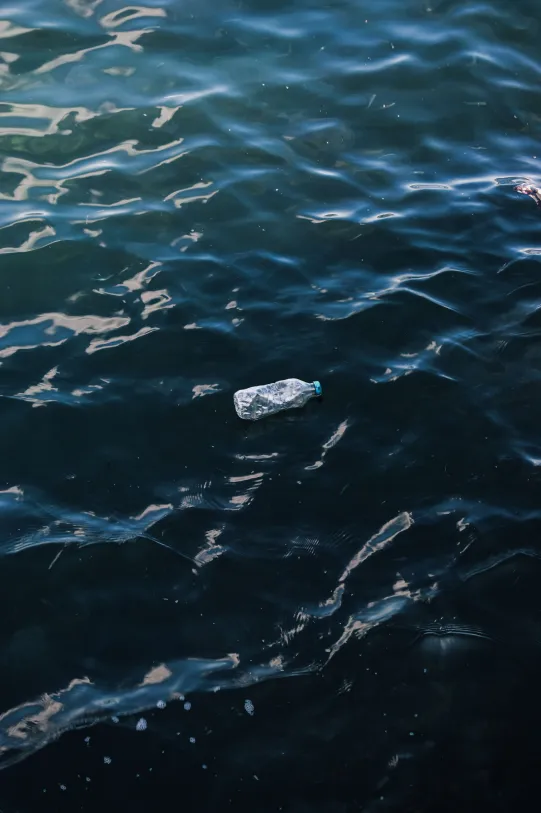
Microplastics are one of the ocean’s biggest threats. Our fibers break down more naturally, helping keep marine ecosystems clear of persistent plastic pollution.
SDG 6 — Clean Water & Sanitation
By reducing microfibers shed into water systems, Better Flags® supports cleaner rivers, lakes, and drinking-water sources.
SDG 12 — Responsible Consumption & Production
We design with the end in mind — materials, traceability, and transparency all aligned with circular-economy principles.
SDG 15 — Life on Land
Soil ecosystems suffer from plastic accumulation too. Our technology helps prevent microplastics from building up in terrestrial environments.
SDG 13 — Climate Action
We support climate action directly through 1% for the Planet, while improving the environmental footprint of traditional polyester.
[Learn About Our Supply Chain]
What Shapes Our Standards
EU Laws That Strengthen the Better Flags® Mission
1. Extended Producer Responsibility (EPR)
What is it: A system that holds textile producers responsible for the full lifecycle of their products.
Requirements:
- Fund waste collection, reuse, and recycling programs
- Register with a Producer Responsibility Organisation (PRO) such as Stichting UPV Textiel or European Recycling Platform Netherlands B.V.
- Provide free return options and educate customers on disposal
- Annual Reporting: Required by August 1st each year to Rijkswaterstaat (in Dutch), detailing product volumes and recycling compliance
Timeline:
- By 2025: 50% prepared for reuse/recycling, 25% fibre-to-fibre; 20% reused, with 10% within the Netherlands
- By 2030: 75% prepared, 33% fibre-to-fibre; 25% reused, 15% reused locally
Netherlands EPR Fees:
- €0.10/kg in 2024
- €0.00/kg from Jan–June 2025
- €0.24/kg from July 2025 onward
Better Flags® Alignment:
Our product design already accounts for end-of-life responsibility, and our biodegradation technology supports long-term circularity goals. While our yarns are currently made from standard polyester, we are actively working toward achieving fully biodegradable yarn systems in the future.
2. Ecodesign for Sustainable Products Regulation (ESPR)
What is it: The EU's flagship framework for building a circular economy.
Requirements:
- Product Design: Addressing the "9Ps" of sustainability:
- Durability and reliability
- Reusability
- Upgradability, reparability, maintenance, and refurbishment
- Presence of substances of concern
- Energy and resource efficiency
- Recycled content
- Remanufacturing and recycling potential
- Carbon and environmental footprints
- Waste generation
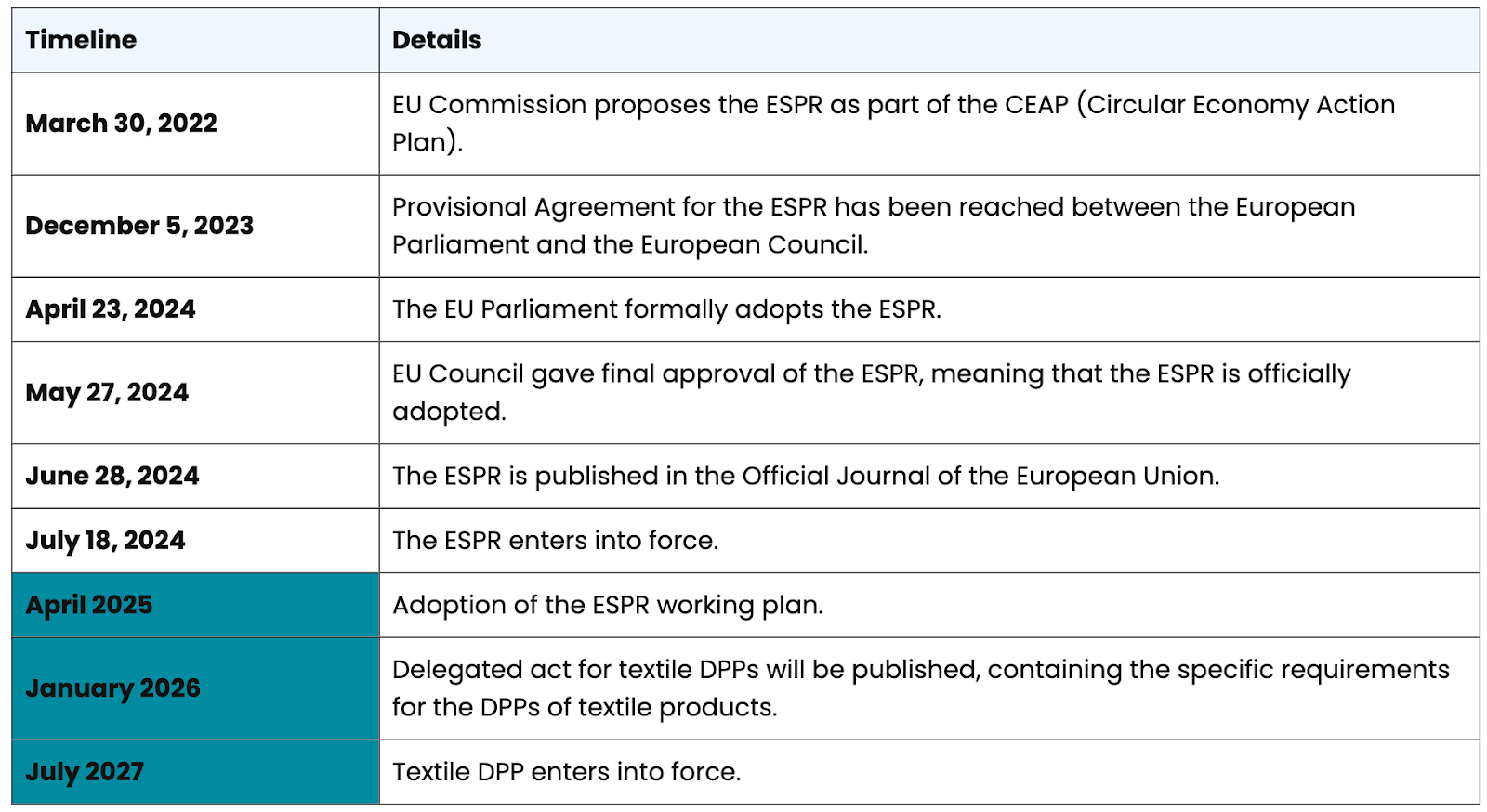
- Digital Product Passport (DPP): A digital record for textile products to improve traceability and transparency.
- Waste Reduction for Unsold Products: Companies must disclose data on unsold textiles and disposal methods, with potential restrictions on destroying unsold goods.
- Green Public Procurement (GPP): Sustainable criteria for government textile purchases.
Timeline: Delegated acts published by Jan 2026
3. Digital Product Passport (DPP)
What It Is: A digital record (via QR or NFC) attached to each product that tracks:
- Unique product ID (ISO/IEC 15459:2015 standard)
- Material origins & carbon footprint
- Manufacturing & logistics data
- Certifications, care, repair, and end-of-life instructions
Benefits:
- Improves traceability, interoperability, and consumer transparency
- Encourages blockchain-enabled supply chain platforms as best practice
Timeline: Coming into effect July 2027
Better Flags® Alignment:
We’re already preparing full DPP integration — digitizing our entire supply chain from yarn to finished flag.
4. Textile Labelling Regulation (TLR) – Revision Coming
4. Textile Labelling Regulation (TLR) - Revision Coming
What is it: The revision of the TLR aims to standardize textile labelling across the EU, reducing complexity for businesses and improving consumer information.
Expected Updates by 2028/2029:
- Harmonized labelling across all EU countries
- Both digital and physical formats
- Potential new labelling categories:
- "Made in" origin details
- EU-wide size standardization
- Care labelling
- Allergenic substance disclosures
- Leather and fur authenticity
- Flammability ratings
- Organic/bio-origin verification
- Socially responsible production indications
Timeline:
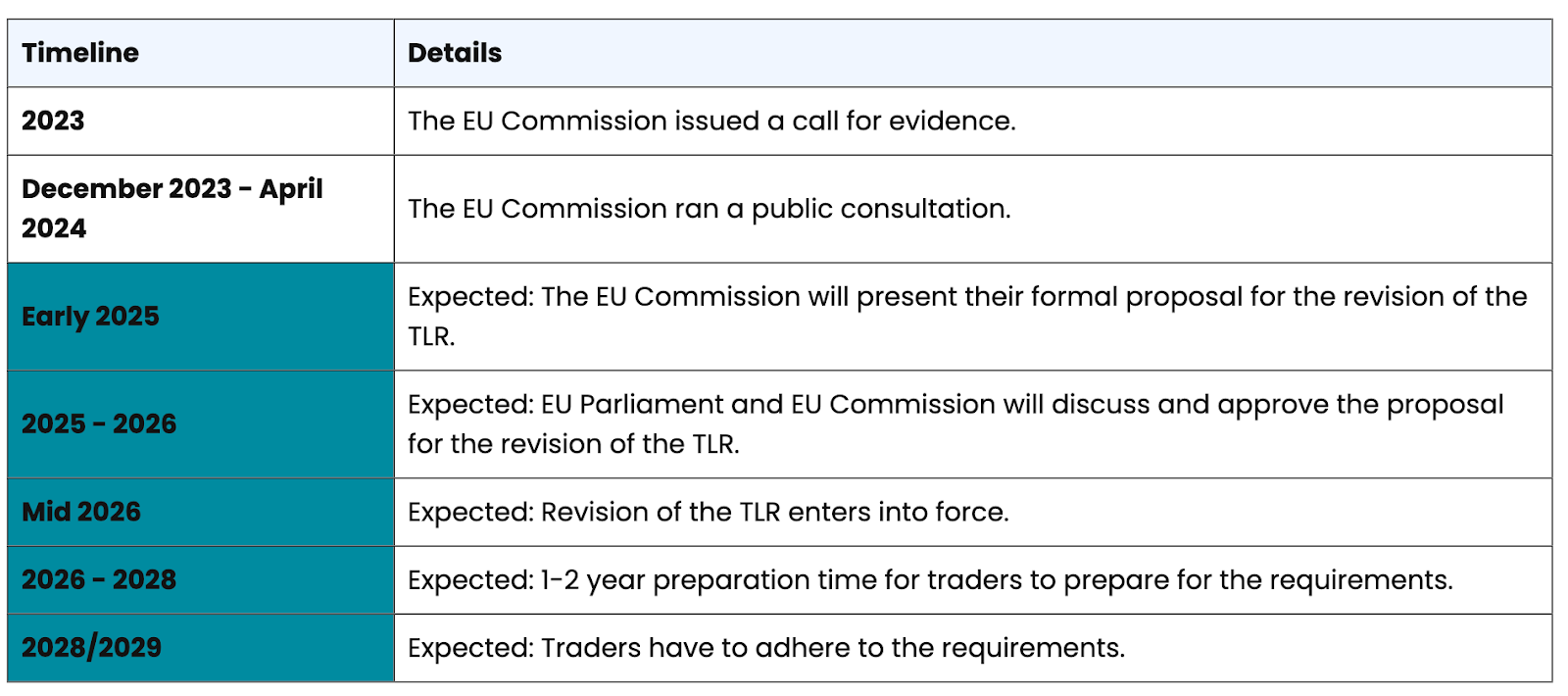
Better Flags® Alignment:
We’ve always believed in informed choices. Our labels are being adapted to fully meet TLR revisions by 2028/2029.
What This Means for Better Flags®
Our mission was born in response to the very gaps these regulations now aim to close. Here’s what it means for us in practice:
Financial Responsibility
We integrate EPR fees and future regulatory costs into our pricing model — because responsible disposal is part of responsible design.
Product Evolution
From day one, our flags were built to last and designed for responsible end-of-life. CiCLO® technology brings true innovation by enabling polyester to biodegrade in specific environments, reducing long-term plastic pollution.
Digital Readiness
We’re preparing our entire supply chain for Digital Product Passport integration by 2027, ensuring full transparency at every stage.
Sustainable Disposal & Reuse
We support proper collection, reporting, and circularity measures — aiming for fewer textiles in landfills and more in reuse and recycling streams. We’re also developing smarter strategies to minimize unsold inventory and support fibre-to-fibre recycling — always aiming for circularity, not landfill.
Communication & Labelling
Our labels and product information are being refined to meet upcoming EU standards so customers always know exactly what they’re raising.
Ahead of the Curve by Design
We’ve been building Better Flags® around responsibility from day one — long before regulations required it.
As the industry races to catch up, we continue to lead with innovation, transparency, and materials designed for a future without microplastic pollution. Sustainability isn’t something we say … it’s something we build into every material, every choice, and every partnership.
Explore Our Latest Insights