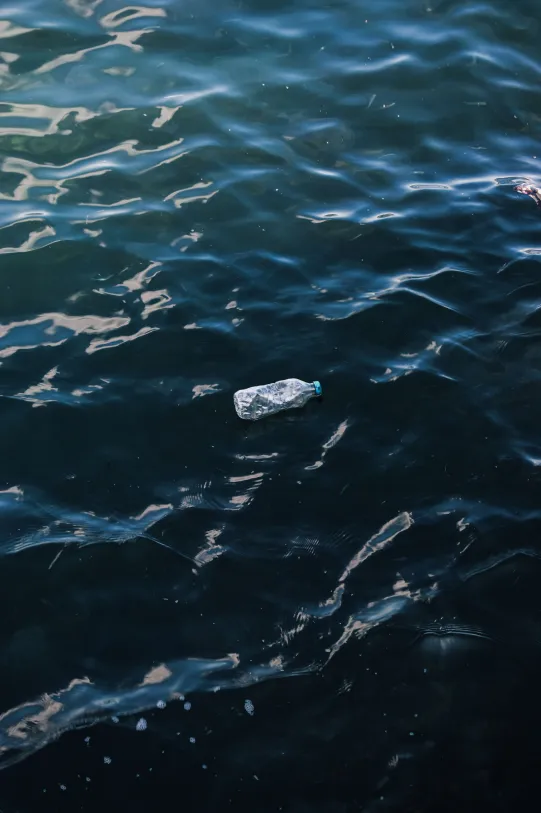
The Myth of the Recycled Flag:
Why 'Green' Polyester is Still Grey
Microfibre Pollution Isn't a Laundry Problem — It's a Design
18 Jun 26 • 4 min read — INSIGHT
Every textile sheds. The amount it releases — and how long those fragments persist — is decided long before a flag ever flies. Here's why we solve it at the origin of the material.
The flag and banner industry consumes millions of metres of polyester every year. We believe there's a better way — and it starts at the very origin of the material. From the moment a fibre is spun, choices made long before a product reaches anyone's hands shape how much it releases into water and soil. For an industry built on fabric, that makes microfibre release a responsibility of design, not an afterthought of use.
Where the Decision Is Made
Four upstream stages decide how a fabric behaves downstream. The polymer and fibre type chosen at the very start set the baseline for everything that follows. How yarns are knitted or woven changes how readily a fabric releases fibres. The processes that cut, dye and assemble the textile add or reduce shedding. And the treatments applied at the end influence how fibres hold together over a lifetime.
Research across academic and industry bodies continues to show that microfibre release can be influenced at each of these stages — which means the largest reductions are available before a single product ever ships.
Designing From the Start
As the conversation around microplastic fibre pollution evolves, more attention is being paid to how materials are designed from the start — at the fibre and polymer levels — alongside system-wide solutions spanning manufacturing, wastewater treatment, policy and consumer behaviour.
Innovations at the polymer stage, including textile additives such as CiCLO®️ technology, are part of this discussion. They can influence how fibres interact with the environment over time, contributing to efforts to reduce long-term microplastic persistence.
Why This Matters for Flags
A flag is fabric in the open — exposed to wind, sun and rain for its entire working life. That makes it exactly the kind of product where upstream choices compound, day after day, for years.
That's why, at Better Flags, the material comes first. Our CiCLO®️ flags are made from polyester enhanced with CiCLO®️ technology, built to biodegrade far faster than conventional polyester once discarded — roughly within three years — and carry OEKO-TEX®️ ECO PASSPORT certification. For applications that demand zero plastic, our plastic-free flags woven from hemp textile go further still.
More Than a Flag
Responsibility doesn't start at disposal. It starts at design. At Better Flags, we deliberately choose materials with a story — from plastic-free flags to planet-friendly CiCLO®️ flags. Same visibility, a fraction of the footprint.
Explore the CiCLO®️ option in our range →
Further reading: microplastics & CiCLO®️ technology
Explore Our Latest Insights


In a Rush? Ready-to-Buy Flags Available
Adipiscing odio arcu auctor sed ut tortor nisi vulputate malesuada. Mi arcu ut mauris nec gravida. Ac varius parturient id lorem nascetur feugiat in mauris purus. Turpis sit nisl nisl phasellus. Mauris pharetra amet eget sagittis bibendum placerat eu velit duis. Eget.
Built to Last
From weaving in Germany to assembly in Austria and the Netherlands, every stage of Better Flags’ production is transparent and documented.
Sustainable and Traceable
All Better Flags are made from polyester enhanced with CiCLO®, sourced responsibly and exclusively from European suppliers.
Planet Friendly
Designed for a lifetime of use, Better Flags biodegrade naturally within approximately three years once discarded.
Awarded & Certified
Better Flags materials meet global standards for environmental responsibility, and carry OEKO-TEX® ECO PASSPORT certification.